Thinking Out Loud

Jim Thornber's Blog

  • About
  • How I became a monk
  • My Book

On Being Afraid Of Not Trying

Posted by Jim Thornber on February 6, 2020
Posted in: Christian Spirituality, Religion, Scripture. Tagged: Christian Spirituality, Faith, Fear, Jesus, Scripture, Spirituality. 2 Comments

Thoughts on The Parable of the Talents — Matthew 25:14-30

Since I’m now of middle age and questionable wisdom, I’ve been spending some time wondering what I want to be when I grow up. I know that teaching Scripture is my true passion and my main gift from God. “What about writing?” you may ask. Writing has always been an avenue for me to teach Scripture, either verbally or through the printed or electronic media.

However, neither of those has ever been my primary source of financial income. I’ve always wanted to be on staff in a church where I could spend most of my time teaching. On the other hand, I’d also like travel to different churches and conferences and share my thoughts about God and His Word. Instead, with the exception of a brief six-month stint on a church staff, I’ve spent most of my working career in the building trades in one form or another. This brings me to the Parable of the Talents.

I can’t help but wonder if I’ve buried my talents. Although I keep comparing myself with Abraham and Joseph, who spent years waiting for God to fulfill His promises, I think it is only honest to wonder if my own pride and sin has kept my dream from being fulfilled. Perhaps this is why I spend so much time writing. I’m hopeful that one day someone will uncover the talent God has given me and I’ll be able to double His investment. Until then, I keep writing in almost total anonymity.

My ultimate dream is to “burn out” for Christ. If could chose my death, it would be right in the middle of a sermon, with two unfinished books in my computer and a pile of teachings in a folder nobody has heard. Then I would feel like I’ve given my all to God and truly invested the talents He has given me.

 I’m not afraid of trying and failing. I am afraid of never trying. While talking to my college roommate about transparency in the pulpit, he wrote me some stirring words that I’ve been pondering ever since.

One of the reasons that grace had to be unlimited is because sin is unlimited. Even a person who lives his whole life in a closet sins grievously. Just look at the parable of the talents. I wish Jesus had included a guy in his story who just blew it all. That would have been me. “I tried Master, really I did. I saw a couple of business opportunities that I thought would work, but they just wouldn’t go. So, here are all the debts I compiled in your name. Some of these you will want to pay pretty quickly as the lenders are the shady sort who might have a whack at your kneecaps if they don’t get paid.” But no, Jesus presented the only failure as the guy who never tried.

 I don’t mind appearing before the Judgment Seat of Christ with a long list of my failures. What bothers me is appearing before God with a short list of the things I was too afraid to attempt. Failure in life is not an option. However, failing to try is.


Jesus: The Prodigal Son

Posted by Jim Thornber on December 13, 2019
Posted in: Christian Spirituality, Religion, Scripture. Tagged: Faith, Forgiveness, Jesus, Spirituality. Leave a comment

“The younger son got together all he had, set off for a distant country and there squandered his wealth in wild living. . .” Luke 15:11-24


When I first studied this passage back in Bible College, it was easy for me to identify the younger son as those people who have taken their God-given gifts and talents and squandered them for their own selfish reasons. I saw them as the heathens among us who didn’t know that God is waiting to welcome them home.

Rembrandt’s “The Return of the Prodigal Son” 

After some reflection (and a few years of maturity), I began to see myself as the prodigal son – wasteful with my own God-given gifts, lavish in my pride, and extravagant in the ways I used my words, even to the point of hurting others. Yes, in many ways I was like the prodigal son.

Seeing myself (and others) as a type of prodigal son is easy. We’re all selfish sinners bent on having our own way at the expense of those who love us. What bothers me (and may bother you) is to consider this: Jesus is the true Prodigal Son.

The word prodigal means to be wastefully or recklessly extravagant or lavish. Jesus recklessly and lavishly invested everything He had so that we could know His eternal love. As I contemplate this, I’m also challenged by how Jesus gave all of Himself while knowing there would not be a 100% return on His investment. Yes, in the omnipotence of God, He knew how many of us would accept His Divine sacrifice. But as a human, Jesus was spending, if not wasting, His entire self on us. True, He loves His creation; but we sure seem to have a funny way of acknowledging His gift.

Jesus the Prodigal. Give this concept some time to sink in. One day Jesus took His inheritance and His title, left the home of His Father and traveled to a distant, foreign country. He spent all He had to become a human and emptied Himself of all the previous privileges He held in His Father’s house. In the strangest investment scheme in history, Jesus prodigiously squandered His inheritance by hanging around with sinners and harlots, drunkards and lepers, tax collectors and sundry riff-raff.  After spending all He had, Jesus sensed God’s abandonment (Matthew 27:46), only to return to the Father hungry and thirsty (John 19:28), fresh out of prison (1 Peter 3:19), dressed in borrowed clothes fit only for a dead man. Continue Reading

When God Is Finished With You

Posted by Jim Thornber on December 5, 2019
Posted in: Christian Spirituality, Religion, Scripture. Tagged: Christian Spirituality, Death, Faith, God, Jesus, Moses, Spirituality. 2 Comments

 “Then Moses went up Mount Nebo from the plains of Moab and climbed Pisgah peak, which is across from Jericho. And the LORD showed him the whole land, from Gilead as far as Dan.” (Deut. 34:1).

A few years ago, I taught a series on the life of Moses at Journey Church. We spent twenty-eight weeks looking at Moses and there remains one thought that stayed with me and transformed the way I see my life with God. The thought is simple: God takes us when He’s finished with us, not when we’re wore out.

As we can see from Deut. 34:1, Moses climbed from the plains of Moab up to the top of the Pisgah range to Mount Nebo. My first, quick reading had me wondering where this area was, but a quick reading usually does me a disservice. Too often, I’ve read the Scriptures the way a hound eats a hot dog: fast, in one gulp and without ever savoring the flavor. Then, without experiencing the subtleties of what I’ve read (or ate), I’ll claim to be full of the Word of God. Sound familiar? What I learned when I slowed down with this passage is although the where is important, the what and the how are keys, because what we learn is just how strong Moses was.

What I learned is Mt. Nebo is 4,500 feet high. Of course, the first thought for most of us is, “Hey, nice view.” But we must never forget that Moses was 120 years old. How many of you could climb almost one mile high now, much less than when you are 120 years old? Furthermore, there was no trail, paved road or air-conditioned buses as there are today. Moses blazed his own trail when he climbed to the top. I have trouble going up and down the stairs at work more than a few times in a row without wheezing, and here’s Moses doing a little last minute mountain climbing and sight-seeing before he finally takes his eternal rest. Moses was a stud.

But Moses wasn’t just physically strong, he was spiritually strong. We don’t find any self-pity or final regrets mentioned in this last chapter of his life. He knew he was going to see the land God promised to Abraham, and he knew he was never going to walk there. Furthermore, the Lord had already chosen Joshua to take the Children of Israel into the Promised Land. The only thing left for Moses to do was to hike a mountain, enjoy the view, and quietly pass away.

And I am sure that Moses enjoyed the view. Verse 7 says “Moses was 120 years old when he died, yet his eyesight was clear, and he was as strong as ever.” Moses was more than twice my age but still he had better eyesight than I do! The word “strong” here occurs six times in the OT with the sense of being fresh, moist, or green like a tree. It speaks of sexual vigor and physical health. Nobody knows how many more years Moses would have lived, lead and had children if the Lord had not taken him when He did. Every part of Moses was physically healthy and spiritually strong. The same was true with Jesus. He had to be tremendously strong to endure the hardships of scourging and crucifixion, and God took Him when He was about thirty-three.

What I want us to meditate on is this: God doesn’t take us when we’re worn out; He takes us when our time is up. This means if you’re still breathing, it God isn’t finished with you yet!


Kung Fu Praying

Posted by Jim Thornber on November 7, 2019
Posted in: Christian Spirituality, Religion. Tagged: Catholic, Christian Spirituality, Faith, prayer, Scripture, Spirituality. 2 Comments

For four years I was a monk with the Brothers and Sister of Charity AND and Assemblies of God minister. The following is a lesson I learned about prayer during my four monastic years. 

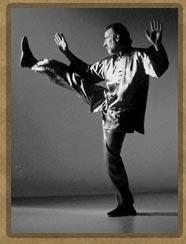
Kung Fu Praying

Every Friday evening at the Little Portion, the community gathered in the chapel for a half hour of silent prayer and meditation. At the appointed time, we would enter the candle-lit chapel, find a place to sit, and silently talk with God. Yes, occasionally you would hear the sound of slow, heavy breathing in the chapel (that unmistakable indication that one of the saints is taking a short siesta), but for the most part, everyone was engaged in some type of prayer. It was during these times-when I desired nothing more than to bask in the presence of God and simply be with the One who loved me to death-that unsavory images from my past or arguments I’ve had with people would come screaming into my head. I know I’m not alone in this experience; I’ve talked to many people who have fought this same battle. Here I am trying to meditate upon God, and an image of girl I once dated (and shouldn’t have) explodes upon my imagination. Now, instead of hoping to catch a glimpse of God’s glory, I have Victoria’s Secret dancing in my head. What’s a monk to do?
 

Oswald Chambers said, “The battle of prayer is against two things in the earthlies: wandering thoughts and lack of intimacy with God’s character as revealed in His word. Neither can be cured at once, but they can be cured by discipline.”  I now share with you my discipline of overcoming wandering thoughts while praying, which I learned by studying martial arts is Bible college.

During my first year at Bethany Bible College, I met a classmate who was an excellent martial artist, and I asked him if he would teach me Kung Fu. Naturally, I didn’t do it because I was worried that I might get mugged on a Christian campus. I did it for the exercise and the fun. My teacher and I would often workout with Mike, another student and 2nd degree black belt in Tae Kwon Do.

I began to notice that if I threw a punch at Mike, he would often respond with a piercing scream and a brutal block of my arm so that I just might come away with a bruise. In Kung Fu, I would meet a punch with a circular motion of my hands that gently guided the oncoming punch away from my body. Or, I could simply sidestep the oncoming projectile, be it a hand, a foot, or a club. In Tae Kwon Do, the attitude is, “You are really going to regret coming at me and I’m going to hurt you REALLY BAD so you will NEVER even THINK about doing that again!!” In Kung Fu the attitude is, “You don’t really intend to hurt me, so I’m going to gently and almost imperceptibly redirect your negative energy so that neither one of us gets hurt and you have a chance to repent of your anger and we can be friends.”  Okay, those were exaggerations, but you get the picture. Now, how does this relate to prayer?

When those unsolicited images come into my mind while I’m praying, my Kung Fu technique taught me to sidestep the offending thoughts and gently let them go by. Too often, I’ve used the Tae Kwon Do technique, which is to bash them into submission, but with little success. It seemed the harder I tried to get them out of my mind, the more forceful they returned. By imagining those images coming at me and gently sidestepping them in my mind, I didn’t give them the energy to continue haunting me and I could calmly go back to my conversation with God.

The other thing I learned to do was to thank God for what I was seeing. Okay, let’s say that scantily clad ex-girlfriend comes into my mind while I’m praying. Instead of trying to fight the image, run away in horror, and repent of my impure, unmonk-like thoughts, I’d say something like, “Lord, I want to thank You that You love her and died for her sins, too. I also want to thank You for the beautiful human body You created, and the pleasure it gives You when we are thankful for your gifts. You are good and Your works are too wonderful for me to comprehend. Be with her now as you are with me in this chapel. Amen.” I wasn’t upset, angry or over-energized by the image, but thanked God for an opportunity to ask His blessings to descend upon a sister’s life. If the devil thought he’d get me distracted from my prayer life, he simply gave me a few more things I could praise God for by praying that He release His goodness and His blessings into people’s lives. When I learned to fight the enemy’s visions with Godly praises, the images occurred less frequently.

Here’s another battle I’ve fought. How many of you have spent a majority of your prayer time replaying an argument you’ve had with a family member or co-worker, raise your hand? I thought so. How many of you have rehearsed an argument you were sure you were going to have in the future, using your prayer time to justify yourself before God, telling Him why you are right and the other person is wrong? Yeah, me too. What a waste of time.

Soren Kierkegaard said, “The function of prayer is not to influence God, but rather to change the nature of the one who prays.” When I’m rehearsing an imaginary argument before God in the name of prayer, I’m simply trying to influence God to see things my way. It doesn’t work. The primary purpose of prayer is to change me, not others. As time went on, I found it very difficult to stand at the Throne of God and accuse my brother or sister. There is already an accuser, and I don’t really want his job. Finally, after wasting many hours in prayer, I began to thank God for the people I was at odds with, whether real or imagined.

Romans 12:18 says, “If it is possible, as far as it depends on you, live at peace with everyone.” If I’m not at peace with people when I’m praying, I certainly won’t be at peace with them when I’m in their presence. Once again, I began to thank God for the people that popped into my mind while in prayer. Was I ever justified for being angry at what they had done to me? Sometimes, but that really wasn’t the point. They were people that God loved and I decided I was going to pray God’s love into their lives. I began asking God to let me see my “enemies” as He saw them, and when He did, He never showed me His anger, but only His loving compassion.

Successful prayer centers upon praying the heart of God. Martin Luther said, “Prayer is not overcoming God’s reluctance, but laying hold of His willingness.” If God was willing to love these people enough to die for them, then I would to. I’d die to my desires for justice and recompense, and use my time in prayer as an opportunity to bring the worst of sinners into the loving presence of God’s Throne. Naturally, the worst of those sinners started with me. When I began to think about all that God had done for me, it wasn’t difficult to pray those same blessings into the lives of others.

Holy Transparent

Posted by Jim Thornber on August 12, 2019
Posted in: Christian Spirituality, Religion, Scripture. Tagged: Assemblies of God, Christian Spirituality, Faith, God, Scripture, Spirituality. 1 Comment

For four years I was an Assemblies of God minister and a monk with the Brothers and Sisters of Charity at the Little Portion Hermitage. This is an excerpt from my book called Taking Off My Comfortable Clothes.

dirty harryBlaise Pascal said, “We must learn our limits. We are all something, but none of us are everything.” Or, as that wise 20th century philosopher Harry Callahan (Clint Eastwood) said in the movie Magnum Force, “A man’s got to know his limitations.”

A key component in being transparent with who you are involves acknowledging what you are not. Admitting your strengths as well as your weaknesses will allow you to be true to yourself, live the life God created you to live, and enable you to say no to those things that are not your calling.

I acknowledge that I am not an apostle, prophet, evangelist, worship leader, business entrepreneur, engineer, chef or bank president; I’m a teacher of Scripture. I also know I thrive teaching the 18-30 year old group, so I can easily say “No” to any request to teach children’s church. At the same time, there are people in the church who love to work with children but would be scared spitless if asked to teach the Tabernacle of Moses to a group of twenty-somethings for twelve weeks, an assignment I would relish with only one regret — we couldn’t stretch it to twenty-four.

Furthermore, I understand that God has given me a certain amount of musical ability, and I’ve played piano on numerous worship teams. However, I also know there are many men and women who are better musicians than I am. Although I enjoy playing piano, I know teaching Scripture and equipping people to be better ministers, not leading worship, is my primary avenue for ministry. The problem for many of us, especially church leaders, begins when we forget Pascal said, “None of us are everything.”

Continue Reading

Clothesline Theology

Posted by Jim Thornber on July 5, 2019
Posted in: Christian Spirituality, Religion. Tagged: Assemblies of God, Christian Spirituality, Faith, God, monasticism, Religion, Spirituality. Leave a comment

The following is an excerpt from my book Taking Off My Comfortable Clothes, which is available now.  The book recounts my thoughts during the four years I was an Assemblies of God minister and a monk with the Brothers and Sisters of Charity. 

A few years ago, my wife and I visited a church to determine if I wanted to become their new pastor. We drove to the church early on that warm, October morning, full of hope and expectation. When we walked into the small fellowship hall, it was obvious we were the visiting pastors, for new, younger faces were easy to spot in this small, elderly congregation. As we passed through the fellowship hall on our way to the sanctuary, one lady gave us a short glance, quickly scanned Barbara up and down, and walked by us without saying a word. Little did we know we had just committed a cardinal sin in this small church: we were not appropriately attired.

We didn’t mean to be under dressed; it just happened. Yes, we were fully covered, but not in their eyes. You see, my wife made the horrible mistake of wearing a pretty black dress that did not fully cover her knees. That didn’t bother me — I kinda like her knees. But it obviously bothered this woman. A lot. Furthermore, I chose to wear a suit and a silk pullover shirt but no tie. Strike two. The odds were stacked against us and we hadn’t even introduced ourselves. It was going to be a long day.

When I look back on it, I see that Barbara and I had a different definition of holiness than the saints of this small congregation. Without knowing our hearts, some pre-judged us as Christians based on nothing more than what we were wearing.

Continue Reading

When God Says “No”

Posted by Jim Thornber on June 14, 2019
Posted in: Religion, Scripture. Tagged: Christian Spirituality, Faith, Rejection, Scripture, Spirituality. Leave a comment

The King David went in and sat before the LORD and prayed.” – 2 Samuel 7:18

When I was in Bible college, I met a girl that I was quite taken with. She was beautiful to look at, loved God with all her heart, and her father was a pastor and my homiletics professor. She was the perfect girl to fulfill my dream of having the perfect wife to accompany me in my ministry to teach God’s Word. God created me to desire such a woman and it seemed the right thing to do.

However, this girl had another plan, and this other plan was called “Jeff.” After spending the day with her at the beach and learning it was to be our last outing together, I was walking back to the car alone and dejected when God spoke to my heart.

“Jim, will you remain single for Me?”

I couldn’t help but wonder if this was some kind of cosmic joke. I was in the midst of walking away from one of the most beautiful ladies I’d ever known and God is asking me if I’ll remain single for Him. Being the biblical scholar I foolishly claimed to be, I quickly scanned my limited knowledge of Scripture and remembered Abraham getting Isaac back after attempting to sacrifice him to God. So I said to God, “Sure. If I sacrifice marriage, can I have it back?”

Can I offer you a piece of advice? Avoid quoting Scripture at God as a way of wiggling out of something you don’t want to do. It makes for a very tense moment between you and God until you answer His question. And I did answer His question. . . .ten months later! I said “Yes,” but it was a lonely ten months.

Of course, there was nothing wrong with wanting this girl to be my wife. God created me to want a wife. He created me to want to share my life with a woman where we would walk together in the ministry of His Good News. I wasn’t asking for something that was unbiblical. I was asking for something He created me to desire. But still He said “No.”

David found himself in a similar situation. After establishing peace in Israel and bringing the Ark to Jerusalem, David looks around him and realizes that not everything is in order. Sure, there is peace. Yes, Jerusalem no longer belongs to the Jebusites. Of course, David now lives in a palace, but the Ark of God lives in a tent. So He decides to build a house for God. He runs it by Nathan, his pastor and spiritual adviser, and the prophet says, “Sounds good to me. Go for it.”

But later that night God says to Nathan, “Not so quick. I have other plans for David and they do not include building a Temple. That is reserved for his son. Instead, I’m going to build a kingdom through David.” And this is the message Nathan brings to David.

And David’s response? He goes and sits down before the Lord. It took me ten months to sit before the Lord when my plans were rejected, but David does it immediately. I decided to sulk, whereas David decided to seek God.

When God has told you “No,” did you sulk or did you seek Him? Did you feel rejected like I did, or did you come to understand that God was simply redirecting you? That’s what God did to me. He redirected my steps from a beach in California to a move to Arkansas to meet another beautiful woman (who was also from California!), who is now my wife of twenty-five years.


I challenge you to look at the good things you’ve wanted to do for God and see that when He has said “No,” it is often not a rejection but a redirection. The Lord told David that his desire to build the Temple was excellent (2 Chron. 6:8). His heart was in the right place, but God had other plans. The Temple did get built by Solomon and David contributed tons of material for the project. It all worked out perfectly, as God knew it would.

Of course, we don’t often see the end so we take God’s “No” as a rejection, as I did on that beach in California. It took me ten years to realize that God’s “No” to one fine lady was also a redirection that allowed Him to say “Yes” to another. And had I just taken the time to go and sit before the Lord and seek Him, I’m sure my season of sulking would have been shortened by many months.

Leaving The Dirt Behind

Posted by Jim Thornber on June 4, 2019
Posted in: Christian Spirituality, Religion, Scripture. Tagged: Christian Spirituality, Christianity, Faith, God, Scripture, Spirituality, Writing. Leave a comment

“Then the Jews…incited a mob against Paul and Barnabas and ran them out of town. So they shook the dust from their feet as a sign of rejection and went to the town of Iconium.” (Acts 13:50-51)


Like most of you reading this blog, I’m an avid reader of anything well written. I’m a big fan of history and biography, but I still like a good mystery, believe the world’s best science fiction (Bradbury, Sturgeon, Dick, Asimov, Lem) contain more truth the most of the evening news broadcasts, and enjoy the occasional novel involving conflicted characters who stumble into truth like a drunken sailor looking for fresh air. In fact, I just finished a novel I enjoyed but wouldn’t recommend in which a character did just that, but unfortunately didn’t understand the truth he rejected.

  In the novel (The Solace of Leaving Early by Haven Kimmel, if you must know!) a pastor called Amos is writing a sermon but isn’t having much luck. He’s been pondering Christ’s teaching about shaking the dust off one’s sandals and leaving a place if people treat you badly. Then Kimmel, through Pastor Amos, wrote the best two sentences of the book: “And don’t take the dirt with you. You won’t need it where you’re going.” The pastor, not seeing the truth he wrote, crossed it out.

But I couldn’t let it go.

Traditionally, the idea of shaking the dust off one’s feet is similar to Pilate washing his hands before the crowd, telling them, “I’m innocent. The responsibility is yours” (Matt. 27:24). Shaking the dust off the feet is a gesture saying we’ve done all we can and we’re not responsible for the consequences.

However, Pastor Amos stumbled upon a truth I’d like to explore, because everyone experiences rejection. We are fired from a job; we don’t make the football team; our political opinions are considered outrageous; our best friend stops talking to us; our spouse leaves us. Rejection is universal. Kimmel, however, understands the gift of shielding the people we will soon meet from the people we’ve moved on from by saying, “And don’t take the dirt with you. You won’t need it where you’re going.”

And she’s right. Why do we allow the dust of yesterday’s rejection to surround us like Pig-Pen’s cloud? I continue to meet people who are surrounded by the pain of the past, and thereby live more really in past than they do in the present. As a result, the dust of the past obscures their vision of what is truly in front of them. Even when people are genuinely nice to them, they can’t always see it because their fear of rejection keeps other people outside the boundaries of their cloud.

The people I meet shouldn’t have to dig through the hurt of yesterday’s dirt and rejection to see the truth of who I am just because someone else couldn’t. I shouldn’t make someone else’s rejection of me become your problem. Besides, the dirt doesn’t define me; God does.

Don’t take the dirt with you. You won’t need it where you’re going.


The Never-Ridden Donkey

Posted by Jim Thornber on February 9, 2019
Posted in: Christian Spirituality, Religion, Scripture. Tagged: Christian Spirituality, Faith, God, Jesus, Religion, Spirituality. Leave a comment

“Go into that village over there. As you enter it, you will see a young donkey tied there that no one has ever ridden. Untie it and bring it here.” (Luke 19:30)

I’ve been teaching through the book of Luke at my church, and this one passage about Jesus riding the young donkey has been on my mind for a couple of weeks. I like this part of the story about Jesus’ entrance into Jerusalem because it reveals a number of things. It shows how often Jesus requires the use of our possessions and why it is always an honor to give back to God a portion of everything He has given us. But the takeaway part of the story for me is to realize how God can use those things little things in our life the rest of the world wouldn’t say is possible.

Matthew tells us the two disciples looked for a donkey tied with its colt beside it and brought both the donkey and the colt with them (Matt. 21:4-5, 7). Now, I’m thinking about the owners of this young donkey no one had ridden. Did they look back after they understood the significance of the event and marvel, saying, “God used us! US! All we really had were two donkeys and Jesus used the smallest one, the one no one had ridden, the one with the least experience, the one no one else would think of using, and with the least of what we had Jesus used it to accomplish His purpose on earth. Wow!” Ponder this: Can you see God using those little things in your life everyone else has dismissed as unusable?

God doesn’t need to use what I have. He could use anything He wants. The Father could have created a donkey out of mud and placed it where Jesus needed it, but He didn’t. Instead, this story tells us He wants to invite us into the events of His purposes. He invites us to trust Him with the gifts He has given us. To be honest, if I was the owner of this little colt, I’d be wondering when I’d be getting my livestock back. “When are you going to return it, Jesus?” would be my question. Or, I might go selfish and wonder how the Lord will bless my donkeys. Will He bring back four donkeys? Will my donkeys always have healthy colts? What’s in it for me? You’ve heard preachers tell you, like with Job, “God will give you double for your trouble?” That might be true, but I don’t want to go through what Job went through to find out!

Furthermore, I want to be like the owners of the animals who, when they heard, “The Lord needs them,” (Luke 19:31), they “immediately” (Matt. 21:3) let them take his possessions. While most people would consider the miracle part of the story being Jesus sitting on a donkey who had never been ridden without being thrown off, in my life the challenging miracle of the story is the “immediately” part. To be honest, I’m still working on my “immediately” responses. In too many ways, I don’t always believe Jesus can use my unridden donkeys, those areas of my life I don’t think anyone has any use for. But this story tells me differently.

Here’s the question I’ve been pondering, so I’ll share it with you. What is your unridden donkey, and how can God use it for His purposes? Then, when you find out, work on your “immediately.” I know I will!

Counting the Cost

Posted by Jim Thornber on December 29, 2018
Posted in: Christian Spirituality, Religion, Scripture. Tagged: Christian Spirituality, Church, Faith, God, Jesus, Spirituality. 2 Comments

“Good Teacher, what should I do to inherit eternal life?” –Luke 18:18

            I’ve been teaching my way through the book of Luke at my church, and the scene with the rich young leader has been challenging me. Like most pastors, when we get ready to write a sermon, we are mostly thinking about how to apply the sermon to the congregation, but God seems to have other things in mind with this passage. I’m finding myself very much like the young man in the story, trying to get God to give me a good answer when in fact, God wants to give me the best.  

            The young ruler asked Jesus, “What should I do to inherit eternal life?” But let’s be real; isn’t that just another way of asking, “What is the minimal I can do and still get to heaven?” Haven’t we all struggled with the idea of giving everything we have to God and never looking back? If you keep reading, even Peter wonders about this when he says, “We’ve left our homes to follow you,” (Luke 18: 28), which can be rephrased as “What’s in it for us?” One of the reasons we become followers of Christ is the promise of heaven, which is good. But it also means our life on earth can be challenging, especially when everything around us seems to cry out, “Worship me. Desire me. Work hard to have me!” while the Holy Spirit reminds us, “You must not have any other god but me” (Ex. 20:3).

The problem most Christians have is the experience of first committing to be a follower of Jesus and then learning to lay everything down over time as God confronts us with our relationship to our riches, but that is not how Jesus taught us. Earlier in Luke, Jesus cautioned us about becoming His disciple by saying, “Don’t begin until you count the cost” (Luke 14:28). He reminded us if we want to be His disciple, we “must hate everyone else by comparison—your father and mother, wife and children, brothers and sisters—yes, even your own life. Otherwise, you cannot be my disciple.” (Luke 14:26). In other words, we don’t follow Jesus and THEN lay everything at His feet. Instead, we abandon our self and our stuff and THEN follow HIM. It’s no wonder so many of us struggle with dying to our self. We’ve never done it! We’ve come to God backwards by allowing Him to be our Savior but not completely Lord of our life and, as a result of not truly counting the cost of discipleship, we find ourselves negotiating with God just how much of our riches we can keep and still inherit eternal life. Here’s the truth: we must count the cost before we embrace the Cross. But few churches teach this. They invite people to the altar for salvation out of a fear of hell and a hope of heaven, and later tell them the cost of discipleship is everything.

When the rich young ruler found out the true cost of discipleship, he wasn’t willing to pay it. I find it interesting that Jesus didn’t chase him down and give him a second chance. Jesus simply let him walk away. Why? Because this young man should have been a miserable, half-follower of God, someone who would never be fully committed to Kingdom principles and therefore unable to make true disciples.

Now the challenge is on my shoulders. Since, like most Christians I know, I was led in a salvation prayer before I counted the cost of discipleship, I find myself wanting to do good for God’s eternal Kingdom but struggling with my possessions. I no longer want to negotiate with God just how much of my stuff I can keep and still inherit eternal life, for the real cost was already paid at Calvary. I won’t let anything on earth distract me from that.


Posts navigation

← Older Entries
Newer Entries →
  • My Book

    If you want to purchase a copy of my book, click the image.

    This book tells of the lessons I learned as an Assemblies of God minister who was also a monk. For four years I lived with the Brothers and Sister of Charity at the Little Portion Hermitage. I went there because I thought it was unique and would make my spiritual life comfortable. God showed me I had to take off my comfortable clothes and put on the clothes of Christ. You can click the image to learn more and purchase the book.

  • December 2025
    S M T W T F S
     123456
    78910111213
    14151617181920
    21222324252627
    28293031  
    « Apr    
  • Archives

    • April 2024
    • September 2023
    • October 2022
    • September 2021
    • August 2021
    • July 2021
    • May 2021
    • November 2020
    • October 2020
    • September 2020
    • July 2020
    • June 2020
    • March 2020
    • February 2020
    • December 2019
    • November 2019
    • August 2019
    • July 2019
    • June 2019
    • February 2019
    • December 2018
    • October 2018
    • September 2018
    • August 2018
    • July 2018
    • June 2018
    • May 2018
    • April 2018
    • March 2018
    • December 2017
    • November 2017
    • October 2017
    • August 2017
    • July 2017
    • June 2017
    • May 2017
    • April 2017
    • March 2017
    • February 2017
    • January 2017
    • December 2016
    • November 2016
    • September 2016
    • August 2016
    • July 2016
    • June 2016
    • May 2016
    • April 2016
    • March 2016
    • February 2016
    • December 2015
    • November 2015
    • September 2015
    • August 2015
    • July 2015
    • June 2015
    • May 2015
    • April 2015
    • March 2015
    • February 2015
    • January 2015
    • December 2014
    • November 2014
    • October 2014
    • September 2014
    • August 2014
    • July 2014
    • June 2014
    • May 2014
    • April 2014
    • March 2014
    • February 2014
    • January 2014
    • December 2013
    • November 2013
    • October 2013
    • September 2013
    • August 2013
    • July 2013
    • June 2013
    • May 2013
    • April 2013
    • March 2013
    • February 2013
    • January 2013
    • December 2012
    • November 2012
    • October 2012
    • September 2012
    • August 2012
    • July 2012
    • June 2012
    • May 2012
    • April 2012
    • March 2012
    • February 2012
    • January 2012
    • December 2011
    • November 2011
    • October 2011
    • September 2011
    • August 2011
    • July 2011
    • June 2011
    • May 2011
    • April 2011
    • March 2011
    • February 2011
    • January 2011
    • December 2010
    • November 2010
    • October 2010
    • September 2010
    • August 2010
    • July 2010
    • June 2010
    • May 2010
    • April 2010
    • March 2010
    • February 2010
    • January 2010
    • December 2009
    • November 2009
    • October 2009
    • September 2009
    • August 2009
    • July 2009
    • June 2009
    • May 2009
    • April 2009
    • March 2009
    • February 2009
    • January 2009
    • December 2008
    • November 2008
    • October 2008
  • Blogroll

    • Archie
    • bbgcmac
    • Bellissimanh
    • Beth Sciallo
    • Brothers And Sisters of Charity
    • George Cannon
    • internet monk
    • Kin Robles
    • natalie spera
  • Recent Posts

    • An Abundance to Give
    • Why Jesus Christ Is NOT My Personal Lord and Savior
    • Thank You For Saying, “Thank You”
    • The Day My Grandmother Talked To Me About Sex
    • A Lesson in Love
  • Recent Comments

    Henry Andrews's avatarHenry Andrews on Our Four-Minute Fling in First…
    Jim Thornber's avatarJim Thornber on Scriptures That Bother Me…
    Nicole's avatarNicole on Scriptures That Bother Me…
    Eva's avatarEva on When God is Silent
    Rosemary Q's avatarRosemary Q on A Poor Widow’s Rich Offer…
  • Pages

    • About
    • How I became a monk
    • My Book
  • RSS Thinking Out Loud

    • An Abundance to Give
    • Why Jesus Christ Is NOT My Personal Lord and Savior
    • Thank You For Saying, “Thank You”
    • The Day My Grandmother Talked To Me About Sex
    • A Lesson in Love
    • God Doesn’t Owe Me An Apology
    • No Wishing Allowed
    • This Is NOT My Money
    • Comfort Is Not The Agenda
    • Going Where Others Cannot
  • Abraham alone Apostle Paul Assemblies of God Blood Brothers and Sisters of Charity Calvary Cancer Catholic Catholicism Cats Character Christianity Christian Spirituality Christmas Church Colossians Community Living Compassion Confession Death Demons Disciples Divorce Ecumenism Exodus Faith Forgiveness Galatians Genesis Gifts Giving God Gratitude Heaven Hebrews International Pentecostal Holiness Church James Jesus Job John Michael Talbot Joy Leadership Little Portion Love Luke Mark Twain Marriage Mary Matthew Miracles monasticism Money Monk Moses Music Noah Obedience Oswald Chambers Pastor prayer Prodigal Son Publishing Religion Romans Salvation Savior Scripture Service Soccer Solomon Spiritual Gifts Spirituality Worship Writing
  • Top Posts

    • Scriptures That Bother Me -- Matthew 14:28-30
    • Scriptures That Bother Me -- 2 Chronicles 32:31
    • Scriptures That Bother Me -- Deuteronomy 8:10
    • The Day My Grandmother Talked To Me About Sex
    • Scriptures That Bother Me -- Luke 2:36-37
    • Why Jesus Christ Is NOT My Personal Lord and Savior
  • Meta

    • Create account
    • Log in
    • Entries feed
    • Comments feed
    • WordPress.com
Create a free website or blog at WordPress.com.
Thinking Out Loud
Blog at WordPress.com.
Privacy & Cookies: This site uses cookies. By continuing to use this website, you agree to their use.
To find out more, including how to control cookies, see here: Cookie Policy
  • Subscribe Subscribed
    • Thinking Out Loud
    • Join 260 other subscribers
    • Already have a WordPress.com account? Log in now.
    • Thinking Out Loud
    • Subscribe Subscribed
    • Sign up
    • Log in
    • Report this content
    • View site in Reader
    • Manage subscriptions
    • Collapse this bar
 

Loading Comments...