Thinking Out Loud

Jim Thornber's Blog

  • About
  • How I became a monk
  • My Book

Scriptures That Bother Me — John 7:24

Posted by Jim Thornber on August 28, 2015
Posted in: Christian Spirituality, Scripture. Tagged: Christian Spirituality, God, Jesus, Scripture, Spirituality. 1 Comment

“Stop judging by mere appearances, and make a right judgment” – John 7:24

 

JudgeI was driving home from church the other morning when I noticed something in the road. The car in front of me swerved to miss the item, and when I got closer, I could see it was a large cardboard box. For some weird reason, I got this noble idea to pull into a nearby parking lot, go out onto the busy street, dodge some early morning traffic and get the box out of the road. If people continued to swerve to avoid the box, sooner than later it was going to cause an accident.

As I headed into the street, I noticed a car slowing down to let me get the box. At first I thought, What a nice man to slow down. Then this thought quickly entered my head: I bet this driver thinks I’m the one who lost the box. Little does he know I’m actually the one doing the good deed.

Here I was just trying to do the right thing and STILL my ego wants somebody to see me and say, “Hey! What a nice, gray-haired man to get that box out of the street. Hope he lives.” Or some such thing. I wanted to be known for the good I was doing, not be judged for being the one who littered the highway.

Now my mind was really kicking into gear. First, how do I know that driver was judging me for littering? I don’t. I figured he was thinking about me what I’d be thinking about someone else if I drove up on a scene where a middle-aged maniac was dodging traffic to save the life of an abandoned cardboard box.

Self-Help Thought # 1: I need to quit trying to guess what other people are thinking about me. Besides, do I really want to know everything people are thinking? No, probably not.

Self-Help Thought # 2: I wonder how many times I judge a scene without all the facts. Just as other drivers may have seen me as the loser (of the box) without knowing my motives, I’ve often viewed others as the culprit in a situation because I didn’t have all the information.

This is why Jesus’ words in John 7:24 hit me so hard: I have often done the very thing He warned us to avoid.

For example: Remember that husband and wife having a low-voiced, intense discussion? Are they arguing because he said something selfish, or are they trying to figure out how to bless a family in the church and still have enough money to pay their rent?

See that man coming out of the bar? Has he been drinking away his paycheck, or did his mom call him to see if he could talk his dad into coming home?

Or that nut in the middle of the street picking up trash. . . .you get the picture.

That’s a lot of mental gymnastics for one morning, but it was a caution to me not to judge a person or a situation too quickly without knowing all the facts. Hopefully, I won’t have to risk my life next time just to learn a simple lesson.

God Behind The Scenes

Posted by Jim Thornber on July 24, 2015
Posted in: Christian Spirituality, Religion, Scripture. Tagged: Christian Spirituality, Faith, Jesus, Scripture, Spirituality. Leave a comment

“When the master of ceremonies tasted the water that was now wine, not knowing where it had come from . . . he called the bridegroom over” – John 2:9


Water-To-WineIt happened again. As the preacher was reading the passage he was getting ready to teach, my mind seized on one scene from the story and took off in a completely different direction. A couple of directions, in fact. I wish it wouldn’t do that, but in this case I like the places it took me.

In John 2, Jesus and the disciples are at a wedding in a little village called Cana in Galilee. A wedding was always a grand and festive occasion, and in a small village like Cana it would be a celebration that involved the whole community. Like today’s wedding celebrations, refreshments were served and at this wedding the wine was very important. Failing to provide adequate wine would be a social disgrace to the family. And in this small village, the newly-married couple would never live it down.

Jesus, with a little nudge from his mother, tells the servants to fill six stone jars with water. Now we have around 120 gallons of water that is about to be turned into wine. Jesus tells the servants to take a sample to the master of ceremonies, a person called in to oversee the distribution of the food and drink. Astonished at the high quality of the wine, the master of ceremonies calls the bridegroom to the side and compliments him on saving the best for last. The bridegroom, naturally, has no idea what he’s talking about, and John doesn’t tell us if he ever confesses the truth.

This is where my mind takes a left turn. Jesus performs this tremendous miracle behind the scenes and as far as we know, never steps forward to take credit. Sure, the servants knew and the disciples get to witness His first miracle, but Jesus stays quiet. Now as the preacher is heading off in an entirely different direction, I’m wondering, “How often does Jesus work behind the scenes to make us look good?” I’m sure, if this story is any indication, God is quite fond of saving people’s reputations and making them look good in ways that go beyond description. I don’t think we’ll ever know all the miracles God has done for us without us having a clue He was even in the room.

Next, I’m astounded by the fact that Jesus’ first miracle saves the reputation of one unknown couple in an insignificant village in the middle of nowhere. If I knew I was soon to be the Savior of the world, I’d probably get all the press together and make a splashy show so everyone would get the message there’s a new Messiah in town and things are REALLY going to be different. But Jesus quietly changes the innocent lives of one newlywed couple and lets the disciples draw their own conclusions. Some would think Jesus’ first miracle was wasted in an unremarkable town on an unremarkable couple. But who are we to tell God who to bless with His miracles? I wouldn’t turn it down if the miracle was pointed at me. Would you?

Here’s the final challenge of this passage. Our behind-the-scenes God seems to take delight in blessing the unknown in quiet and unassuming ways. Can we? Can we bless someone in need and do so without fanfare, without recognition, without our name in the bulletin or in the paper? Can we let the blessing be a blessing even if someone else gets the credit? It’s the way of Jesus in this story. I hope it can be the way of all of us.


How Large Is Your Corner?

Posted by Jim Thornber on June 28, 2015
Posted in: Christian Spirituality. Tagged: Christian Spirituality, Faith, God, Jesus, Religion, Scripture, Spirituality. Leave a comment


Then Boaz asked, “Who is that young woman over there?” And the foreman replied, “She is the young woman from Moab who came back with Naomi. She asked me this morning if she could gather grain behind the harvesters.” – Ruth 2:5-7.

wheat It happened to me again. I was reading a story in the Bible and one idea jumped out at me and has held my attention for weeks. And I’ve learned by now that when one passage of Scripture captures me for that long I’m in for some changes. It all came about because I started teaching a series on the book of Ruth.

Most of us are familiar with the story of Ruth. Born in Moab, she marries a man from Bethlehem only to have him die and leave her without any children. She decides to go to Bethlehem with her mother-in-law Naomi, and once there goes out into the fields to glean food for their next meal. As God planned it, Ruth finds herself in the field of Boaz, a wealthy landowner and also a relative of her late husband.

One day Boaz visits his field and he notices a strange face and says to his foreman, “Who is that young woman over there? Who does she belong to?” he says. Why does he ask? The simplest explanation is that Boaz noticed her because she was an unfamiliar face in a small town, and you know how that can be. When the foreman tells Boaz who she is, a world of information is conveyed. Boaz, like all the town of Bethlehem, knows this woman left her home and family to be with Naomi. Boaz is aware of the tremendous sacrifices Ruth has made to be with Naomi. Next, the foreman goes on to tell Boaz of Ruth’s strange request: “She asked me this morning if she could gather grain behind the harvesters” (vs. 7).

Traditionally, we’ve understood Ruth to be asking permission to glean. But this seems unlikely since the law already permitted gleaners. When harvesting in a field, hired men went first, grabbed a handful of standing grain stalks with one hand and with the other, cut the stalks low and laid them on the ground. Female workers followed, gathering and binding the cut grain into bundles to be carried to the threshing floor where the kernels were separated from the husks. Gleaners came last and were permitted in the field only after the hired men and the women finished bundling the sheaves and removing them from the field.

Why does this matter? Because many are the time good church-going people are quick to obey the letter of the law while ignoring the spirit of the law. The letter of the law of God says, “Let the poor glean,” while the spirit of the law of God was saying “Feed the poor.” Boaz decides to do both.

Here’s where the Scriptures started to invade my mind. In order to understand more about gleaning I needed to read from Lev. 19:9, which says, “When you harvest the crops of your land, do not harvest the grain along the edges [corner] of your fields, and do not pick up what the harvesters drop.” So far, so good. But here’s the question that’s been disturbing me for weeks now. “How big is my corner? How large is my edge?” Did you notice that passage doesn’t say how large an edge to leave? This means it is up to me to decide how much of my income I want to give to the poor. This means the size of my corner is determined by the size of my love for God.

One more thing. God instructed the Israelites not to harvest the grain along the edges of their fields as a way to provide for those who were less fortunate. But remember, this instruction was in addition to the fact that Boaz, if he was a true follower of the Lord, had already tithed on the firstfruits of his grain harvest. In other words, Boaz gave ten percent of his harvest to God and left the edges of his fields for the poor. The tithe was his return to God. The edges of his fields are his offerings to help the poor.

So, how large is your corner? How wide is your edge?


What Is In Your Future?

Posted by Jim Thornber on June 5, 2015
Posted in: Christian Spirituality, Church, Leadership. Tagged: Christian Spirituality, Church, Faith, God, International Pentecostal Holiness Church, Jesus, Religion, Scripture, Spirituality. Leave a comment

“Paul felt compelled by the Spirit to go over to Macedonia and Achaia before going to Jerusalem. ‘And after that.” he said, ‘I must go on to Rome.’” – Acts 19:21


long-road-into-the-sunsetWhen you talk about the dreams you have for the future, what do they involve? Do they include a comfortable retirement, a good 401k, perhaps some traveling? Those are a few of the things I think about. But then, as I’m preaching through the book of Acts at my church, I come across this verse where Paul says he must go on to Rome. It seems Paul’s idea of a future involved going to Rome and dying for His Lord, while Jesus’ earthly future involved Calvary. Both these men finished their lives with the needs of others on their mind and the promotion of the Good News on their hearts. Now I have to ask myself this question: Does my vision of the future involve the Good News of Jesus brought into people’s lives? How about you? What is your Gospel hope? Where do you plan to take the Gospel next?

If the Gospel is truly moving in you; if the Word of God is so deep into your life that it is able to judge and separate the thoughts and attitudes of your heart (Heb. 4:12), then it will confront any vision of the future that does not include speaking about the goodness of God and the sacrifice of His one and only Son. I’ll take it a step further. I don’t know if it is possible to be a fully dedicated disciple of Jesus Christ and have a vision for the future that does not include making disciples, because the Great Commission of Jesus to the Church is to take the Gospel into all nations and make disciples. It wasn’t to make churches, construct nice buildings, develop an exciting Children’s church, put together a killer worship team and hire a dynamic preacher that makes you feel good about your relationship with God. Christ commissioned us to make disciples.

Can we truly be obedient to God and not be involved in making disciples of Jesus? If you will not put yourself out and involve yourself in the lives of others in a way that introduces the full story of Jesus and the power of Calvary, then you can say you love God until you run out of breath, but the truth is you’re not obeying the Word of the Lord. Continue Reading

Is There An Elephant In The Room?

Posted by Jim Thornber on May 9, 2015
Posted in: Christian Spirituality, Leadership. Tagged: Christian Spirituality, Church, Faith, God, Religion, Scripture, Spirituality. Leave a comment

The king and his men marched to Jerusalem to attack the Jebusites, who lived there. The Jebusites said to David, “You will not get in here; even the blind and the lame can ward you off.” They thought, “David cannot get in here.” Nevertheless, David captured the fortress of Zion—which is the City of David. 2 Sam. 5:6-7

elephantI don’t know if I’ve ever been to a church that didn’t have an elephant or two in the room. Even the church I pastor has a few. They seem to be everywhere, sitting right in the middle of everything, acknowledged by everyone and addressed by no one.  However, elephants don’t make good church members. They take up too much room and will eventually make a mess that might be impossible to clean up.

David had an elephant in the room when he became King, and they were the Jebusites who still occupied Jerusalem. Everyone knew they were there, squatting on the hill that Abraham took Isaac to in obedience to God’s command to sacrifice his only son. But David, who wasn’t afraid of Goliath or lions or bears, certainly wasn’t going to let a nasty little elephant stand in the way of God’s desire to establish His name in Jerusalem (Deut. 12:5; 2 Chron. 6:6).

How do you exit and elephant from the room of your church? Or your life? These are the points I used last week to address some of the elephants at Journey Church, and help people address their personal elephants – those things everyone (including yourself!) knows is there but no one wants to talk about. Perhaps they will help you.

You exit an elephant from the room by:

1. Admitting it exists (2 Sam. 5:6). That’s just common sense. You cannot address an issue if you won’t admit it exists. But many people won’t. King Saul didn’t. If you don’t think you have any personal elephants, ask your friends or family. You might be surprised at their answer.

2. Ignoring its taunts (2 Sam. 5:7). Elephants can be loud and noisy. They walk on padded feet, but when they start to make noise, the trumpeting is not something you want to listen to all day. The Jebusites told David even the blind and lame could keep him out of Jerusalem. Elephants will taunt you with an element of truth mixed with a lot of lies. Your elephant is probably right in the middle of your territory. It looks impregnable. It mocks you. It says you will never overcome it. It says you are so weak that two people, one blind and one lame, could defend it from your efforts to overcome it. Ignore it. Remember that Jesus said, “Here on earth you will have many trials and sorrows. But take heart, because I have overcome the world” (John 16:33). Continue Reading

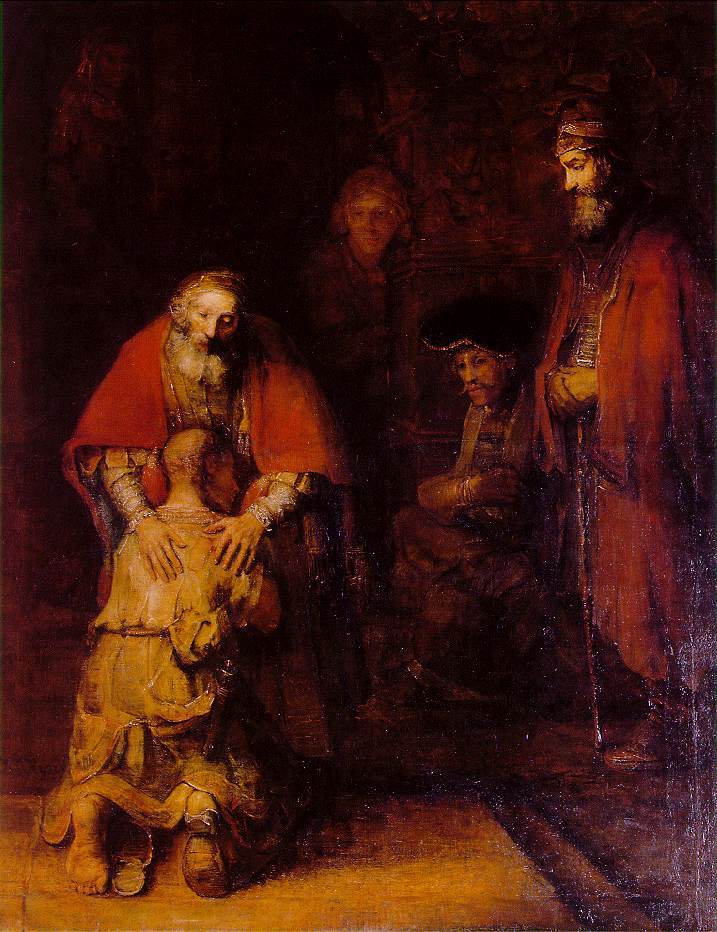
Jesus: The Prodigal Son

Posted by Jim Thornber on April 18, 2015
Posted in: Christian Spirituality, Religion, Scripture. Tagged: Faith, God, Jesus, Prodigal Son, Scripture, Spirituality. 2 Comments

“The younger son got together all he had, set off for a distant country and there squandered his wealth in wild living. . .” Luke 15:11-24

Rembrandt, The Return of the Prodigal Son, 1662–1669

Rembrandt, The Return of the Prodigal Son, 1662–1669

When I first studied this passage back in Bible College, it was easy for me to identify the younger son as those people who have taken their God-given gifts and talents and squandered them for their own selfish reasons. I saw them as the heathens among us who didn’t know that God is waiting to welcome them home.

After some reflection (and a few years of maturity), I began to see myself as the prodigal son – wasteful with my own God-given gifts, lavish in my pride, and extravagant in the ways I used my words, even to the point of hurting others. Yes, in many ways I was like the prodigal son.

Seeing myself (and others) as a type of prodigal son is easy. We’re all selfish sinners bent on having our own way at the expense of those who love us. What bothers me (and may bother you) is to consider this: Jesus is the true Prodigal Son.

The word prodigal means to be wastefully or recklessly extravagant or lavish. Jesus recklessly and lavishly invested everything He had so that we could know His eternal love. As I contemplate this, I’m also challenged by how Jesus gave all of Himself while knowing there would not be a 100% return on His investment. Yes, in the omnipotence of God, He knew how many of us would accept His Divine sacrifice. But as a human, Jesus was spending, if not wasting, His entire self on us. True, He loves His creation; but we sure seem to have a funny way of acknowledging His gift.

Jesus the Prodigal. Give this concept some time to sink in. One day Jesus took His inheritance and His title, left the home of His Father and traveled to a distant, foreign country. He spent all He had to become a human and emptied Himself of all the previous privileges He held in His Father’s house. In the strangest investment scheme in history, Jesus prodigiously squandered His inheritance by hanging around with sinners and harlots, drunkards and lepers, tax collectors and sundry riff-raff. After spending all He had, Jesus sensed God’s abandonment (Matthew 27:46), only to return to the Father hungry and thirsty (John 19:28), fresh out of prison (1 Peter 3:19), dressed in borrowed clothes fit only for a dead man.

Another thing that challenges me about this story is that we often call it the Parable of the Prodigal Son, when we should think of calling it the Parable of the Prodigal Father. The entire story centers around the love, compassion, forgiveness, longing and hope the Father showed in reconciling with the son. Or with me, for that matter. Whatever else I’ve been wasting my life on, God knows it is Jim who is hurting, Jim who needs to go home, Jim who needs to know there is still a family ring to wear and an expensive robe to cover my nakedness. And in my first effort to return, God makes the next move and runs to meet me. I don’t even make it all the way home before I sense the forgiving arms of the Father’s embrace. God the Father is prodigal in His love.

The lesson for me is this: love is never a waste. It can never be too extravagant, overly invested or lavishly spent. At the end of my life, I want people to say of me, “Jim spent all he had to love those around him.” I may have gotten a late start in life on that road home to the Father’s heart, but it is never too late to return.

More Than A Guest?

Posted by Jim Thornber on April 12, 2015
Posted in: Christian Spirituality. Tagged: Christian Spirituality, Faith, God, Jesus, Religion, Scripture, Spirituality. Leave a comment

Let the word of Christ dwell in you richly—Col. 3:16

Old BibleA few weeks ago we had some family come and stay with us for a few days. They live about three and a half hours away, so when they come for a visit it is always a special event. We clean the house, over-stock up on food, make the bed in the guest room (which probably wasn’t cleaned since the last guest), clear a path from the laundry room to the kitchen (Admit it; you do the same thing), take out pillows and blankets and pull the mattress off the futon so the kids can sleep on the floor, and generally put the house in order. And it stays that way for about, oh, the six minutes it takes the grand kids to drop their stuff, get out the toys, and make themselves at home.

Naturally, we wouldn’t have it any other way. Our family is always welcome to visit us and stay as long as they want, which usually isn’t long enough.

After they leave, we pick up the house, put the guest room back in order, fold the blankets, replace the mattress, start a new load of laundry and then sit in silence. We miss the crowded living room and the noise, but it’s nice to have the house back in order again. We made room for our guests, but now that they’re gone, we quickly put the house back the way we like it.

This scenario reminds me of the difference between a guest in a house and the one who owns and dwells in a house. A guest is not a permanent resident; a dweller is. A guest comes and goes according to what is convenient for him and the host. A dweller remains regardless of the circumstances. A guest does not have the right to paint the walls and move the couch near the window. Only the resident of the house has those privileges.

In Colossians 3:16, Paul tells us to let the word of Christ dwell in us richly. As I studied this passage, I began to see the differences between a guest and a resident. That done, I had to ask this question: Am I allowing the Word to dwell in me like a resident in a house, or do I simply invite it in like an infrequent guest, hoping it won’t stay too long and try to rearrange the furniture?

I like the way Eugene Peterson translates this verse in The Message. “Let the Word of Christ – the Message – have the run of the house. Give it plenty of room in your lives.”

The Message of Christ, the full teaching and knowledge of Jesus’ purpose and being, should have the run of my life. That’s another way of saying Jesus is King of my life and His every word is my command. I wish it were always true. But Peterson doesn’t stop there. For some mean and sadistic reason he adds, “Give it plenty of room in your lives.” Thanks, Gene. Not only am I having trouble letting Jesus have full run of the house, now you’re telling me I have to give Him plenty of room to do so.

And here I was hoping the guest room would suffice.

Now I have a question for all of us who make the claim that Jesus is the Lord of our life. Is the Message and presence of Christ living and dwelling in me as an owner occupies a house, or does is just come and visit on weekends at my convenience?


On Not Being Everything To Everyone

Posted by Jim Thornber on March 8, 2015
Posted in: Christian Spirituality, Leadership. Tagged: Christian Spirituality, Faith, God, Jesus, Religion, Spirituality. Leave a comment

Letting-Go-Open-HandsEvery Friday morning I meet with a group other pastors from my town: a Lutheran, a Baptist, a Quaker and another Pentecostal. We gather at a local coffee shop and talk, share stories, encourage one another, learn how the others are handling situations similar to our own and, over time, become friends. This friendship has led to my inviting some of these pastors to fill in when I am out of town and my going to their church to do the same.

During our conversations I’ve learned how powerless we all feel in helping some people. It seems no matter what we do for some folks, what we have to offer isn’t what they are looking for and so they go off to another church or another pastor to get what they need. We’ve all watched as people have left our church to go to another church where they find a place that brings them the peace and comfort they need. I’ve watched as people have left churches I’ve been involved with begin the true process of healing by joining another fellowship. And that is okay. My philosophy is that they haven’t left the Kingdom of God when they go to another church; they are just found fellowship in another part of the one Body of Christ. Furthermore, because I’m friends with some of these other pastors, I don’t look at them as competitors in the Kingdom but as companions along the Way. So if someone can grow better in Christ by planting themselves in another fellowship, then I am glad for them.

The lesson I am taking away from this observation is simple, and that is I am learning to be at ease with the fact that some people’s hurt is beyond my ability to help. I was a long time in coming to that conclusion, but I know I am right. Continue Reading

Why It Is Impossible To Join A Church

Posted by Jim Thornber on February 21, 2015
Posted in: Christian Spirituality, Church, Religion. Tagged: Christian Spirituality, Church, Faith, God, Jesus, Religion, Scripture, Spirituality. Leave a comment

“In Christ we who are many form one body, and each member belongs to all the others.” – Romans 12:5


one-body-many-membersAfter reading this passage in Romans, I’m starting to question the whole idea of church membership. How can I join a church, that is, a local assembly of believers, when I already belong to the Church, the one Body of Christ?

Like you, I live in a town with many churches. Large and small, independent and mainline, the body of Christ is widely represented. However, my understanding of Romans 12:5 tells me there is only one Church in my city; we just happen to meet in different locations.

So the question is: “How can I join a particular assembly of believers and become a member of their church when I already belong to all the others?” My gifts and my life are not my own. I belong to the body of Christ, not just to the assembly that gathers under the banner of my particular denomination. Even though I am an ordained minister of a large denomination, I don’t limit myself or my fellowship solely to this organization. Furthermore, I don’t exist to promote my denomination; rather, my denomination exists to give me what I need to do the work in the “white and ready to harvest” field of the world. In other words, my denomination exists to help me promote Jesus. I don’t exist to promote my denomination.

I’m starting to think that becoming a member of a local church is like saying my arm can choose to join my shoulder. Continue Reading

What’s Your Story?

Posted by Jim Thornber on January 24, 2015
Posted in: Christian Spirituality, Religion, Scripture. Tagged: Christianity, Faith, God, Jesus, Religion, Scripture, Spirituality. 3 Comments

“Peter turned and saw the disciple whom Jesus loved was following them . . . When Peter saw him, he asked, ‘Lord, what about him?’ Jesus answered, ‘If I want him to remain until I return, what is that to you? You must follow me.’” – John 20:20-22

Aslan-SarısıLike many of you, I am a fan of good preaching and teaching. I like to hear the Word expounded, exposed and then applied. I like to learn new truths about Scripture that encourage me and build my faith. I like it when good teachers shine the light of truth upon my path and I get those “AH HA” moments when I discover something new about God.

What bothers me is when a teacher shares how God has done something wonderful and unique in their life and then tries to tell me if I pray or fast or read the same book (or worse, buy THEIR book!) then God will do the same thing for me. Really? God wants my story to be the same as their story? I don’t think so. Our very imaginative God created over 350,000 species of beetles alone. Why must someone else’s story also be mine? I’m called to be like Christ, not the preacher down the street or on T.V.

The other night I was rereading The Horse and His Boy by C.S. Lewis. In one scene the boy named Shasta is having a conversation with Aslan. Aslan just finished telling him He was the lion that forced him and Aravis, another girl on a horse, to travel together. He was the cat who comforted Shasta among the houses of the dead and the lion who drove the jackals away while he slept.

Finally Shasta begins to understand and says, “Then it was you who wounded Aravis?”

“It was I,” says Aslan.

“But what for?” asks Shasta.

“Child,” says Aslan. I am telling you your story, not hers. I tell no one any story but his own.”

After reading that last line I sat straight up in bed and inhaled. My wife said, “What’s up?” I read her that passage and then said, “Jesus tells no one any story but their own, and then we turn and try to make our story their story. Why would we do that?” Continue Reading

Posts navigation

← Older Entries
Newer Entries →
  • My Book

    If you want to purchase a copy of my book, click the image.

    This book tells of the lessons I learned as an Assemblies of God minister who was also a monk. For four years I lived with the Brothers and Sister of Charity at the Little Portion Hermitage. I went there because I thought it was unique and would make my spiritual life comfortable. God showed me I had to take off my comfortable clothes and put on the clothes of Christ. You can click the image to learn more and purchase the book.

  • February 2026
    S M T W T F S
    1234567
    891011121314
    15161718192021
    22232425262728
    « Apr    
  • Archives

    • February 2026
    • April 2024
    • September 2023
    • October 2022
    • September 2021
    • August 2021
    • July 2021
    • May 2021
    • November 2020
    • October 2020
    • September 2020
    • July 2020
    • June 2020
    • March 2020
    • February 2020
    • December 2019
    • November 2019
    • August 2019
    • July 2019
    • June 2019
    • February 2019
    • December 2018
    • October 2018
    • September 2018
    • August 2018
    • July 2018
    • June 2018
    • May 2018
    • April 2018
    • March 2018
    • December 2017
    • November 2017
    • October 2017
    • August 2017
    • July 2017
    • June 2017
    • May 2017
    • April 2017
    • March 2017
    • February 2017
    • January 2017
    • December 2016
    • November 2016
    • September 2016
    • August 2016
    • July 2016
    • June 2016
    • May 2016
    • April 2016
    • March 2016
    • February 2016
    • December 2015
    • November 2015
    • September 2015
    • August 2015
    • July 2015
    • June 2015
    • May 2015
    • April 2015
    • March 2015
    • February 2015
    • January 2015
    • December 2014
    • November 2014
    • October 2014
    • September 2014
    • August 2014
    • July 2014
    • June 2014
    • May 2014
    • April 2014
    • March 2014
    • February 2014
    • January 2014
    • December 2013
    • November 2013
    • October 2013
    • September 2013
    • August 2013
    • July 2013
    • June 2013
    • May 2013
    • April 2013
    • March 2013
    • February 2013
    • January 2013
    • December 2012
    • November 2012
    • October 2012
    • September 2012
    • August 2012
    • July 2012
    • June 2012
    • May 2012
    • April 2012
    • March 2012
    • February 2012
    • January 2012
    • December 2011
    • November 2011
    • October 2011
    • September 2011
    • August 2011
    • July 2011
    • June 2011
    • May 2011
    • April 2011
    • March 2011
    • February 2011
    • January 2011
    • December 2010
    • November 2010
    • October 2010
    • September 2010
    • August 2010
    • July 2010
    • June 2010
    • May 2010
    • April 2010
    • March 2010
    • February 2010
    • January 2010
    • December 2009
    • November 2009
    • October 2009
    • September 2009
    • August 2009
    • July 2009
    • June 2009
    • May 2009
    • April 2009
    • March 2009
    • February 2009
    • January 2009
    • December 2008
    • November 2008
    • October 2008
  • Blogroll

    • Archie
    • bbgcmac
    • Bellissimanh
    • Beth Sciallo
    • Brothers And Sisters of Charity
    • George Cannon
    • internet monk
    • Kin Robles
    • natalie spera
  • Recent Posts

    • This Angel Didn’t Have Wings
    • An Abundance to Give
    • Why Jesus Christ Is NOT My Personal Lord and Savior
    • Thank You For Saying, “Thank You”
    • The Day My Grandmother Talked To Me About Sex
  • Recent Comments

    Henry Andrews's avatarHenry Andrews on Our Four-Minute Fling in First…
    Jim Thornber's avatarJim Thornber on Scriptures That Bother Me…
    Nicole's avatarNicole on Scriptures That Bother Me…
    Eva's avatarEva on When God is Silent
    Rosemary Q's avatarRosemary Q on A Poor Widow’s Rich Offer…
  • Pages

    • About
    • How I became a monk
    • My Book
  • RSS Thinking Out Loud

    • This Angel Didn’t Have Wings
    • An Abundance to Give
    • Why Jesus Christ Is NOT My Personal Lord and Savior
    • Thank You For Saying, “Thank You”
    • The Day My Grandmother Talked To Me About Sex
    • A Lesson in Love
    • God Doesn’t Owe Me An Apology
    • No Wishing Allowed
    • This Is NOT My Money
    • Comfort Is Not The Agenda
  • Abraham alone Angels Apostle Paul Assemblies of God Blood Brothers and Sisters of Charity Calvary Cancer Catholic Catholicism Cats Character Christianity Christian Spirituality Christmas Church Colossians Community Living Compassion Confession Death Demons Disciples Divorce Ecumenism Exodus Faith Forgiveness Galatians Genesis Gifts Giving God Gratitude Heaven Hebrews International Pentecostal Holiness Church James Jesus Job John Michael Talbot Joy Leadership Little Portion Love Luke Mark Twain Marriage Mary Matthew Miracles monasticism Money Monk Moses Music Noah Obedience Oswald Chambers Pastor prayer Prodigal Son Publishing Religion Romans Salvation Savior Scripture Service Solomon Spiritual Gifts Spirituality Worship Writing
  • Top Posts

    • Scriptures That Bother Me -- Matthew 14:28-30
    • This Angel Didn’t Have Wings
    • The Day My Grandmother Talked To Me About Sex
    • Scriptures That Bother Me -- 2 Chronicles 32:31
    • You Are The Man
    • Scriptures That Bother Me -- Matthew 14:13-21; 15:32-38
    • Scriptures That Bother Me -- 1 Corinthians 12:11
    • Scriptures That Bother Me - Micah 6:8
    • Resurrected Blood!
    • Scriptures That Bother Me -- Colossians 1:22
  • Meta

    • Create account
    • Log in
    • Entries feed
    • Comments feed
    • WordPress.com
Create a free website or blog at WordPress.com.
Thinking Out Loud
Blog at WordPress.com.
Privacy & Cookies: This site uses cookies. By continuing to use this website, you agree to their use.
To find out more, including how to control cookies, see here: Cookie Policy
  • Subscribe Subscribed
    • Thinking Out Loud
    • Join 260 other subscribers
    • Already have a WordPress.com account? Log in now.
    • Thinking Out Loud
    • Subscribe Subscribed
    • Sign up
    • Log in
    • Report this content
    • View site in Reader
    • Manage subscriptions
    • Collapse this bar
 

Loading Comments...